
Born of two worlds and claimed by both, E. Pauline Johnson spent her career doing something few Canadians of her era dared: standing before audiences as a Mohawk woman and demanding to be heard. A poet, performer, and public figure active in the late nineteenth and early twentieth centuries, she brought Indigenous voices into a cultural conversation that had largely excluded them. This article traces her path from the Six Nations reserve on the Grand River to packed concert halls across Canada and Britain, through her most celebrated writings, and into a legacy that still resonates.
From Six Nations to the Victorian Literary World
Emily Pauline Johnson was born on March 10, 1861 (some say 1861), on a reserve house called Chiefswood. Chiefswood was located in the Six Nations of the Grand River Six Nations near Brantford, Ontario. Her upbringing was particularly unique for her time. Her father, George Henry Martin Johnson, was a Mohawk chief and well-respected interpreter. He worked hard to bridge the settler and Indian communities situated along the Grand River. Her mother, Emily Howells, came from a white European immigrant family with strong literary credentials. That was the point at which it happened that Pauline stood as a person at the single most possible important intersection on a grand scale from and as so few other Canadians in the 1860s had ever borne the capacity.
Chiefswood itself was a reflection of this duality. A Victorian structure on a reserve it may be, they moved through Mohawk rites to drawing-room civilities with an élan. Pauline read Keats and Longfellow paired with Haudenosaunee oral traditions. Thanks to her father’s status, you could say she got access to Indigenous community life, and her nicely cultured mother introduced her to settler literature.
This upbringing really gave her something special-an inheritance pregnant with the dualities she would later bring into herself as public identity. She actually carried this identity to the stages of Canada and Great Britain; that personal being was not a performance for an audience’s delight. It had been incubated since her childhood by a household that never warmed itself in the glow of singularity.
How Pauline Johnson Became a Celebrated Stage Performer
By 1892, Johnson had moved beyond the literary magazines that first published her verse and stepped onto the stage in Toronto, where a single recital launched one of the most distinctive performance careers in Canadian history. The response was immediate. Audiences packed theatres to hear her read her own poetry aloud, and within a few years she was touring nationally, then crossing into the United States and eventually Britain.
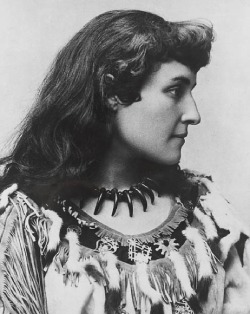
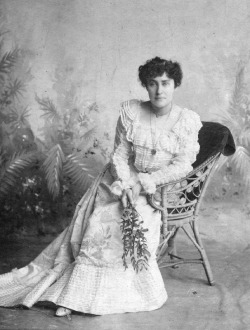
Her signature device was a mid-show costume change that audiences came to expect and anticipate. She opened each performance in a hand-crafted outfit representing her Mohawk heritage, complete with wampum and a bear-claw necklace, then returned in a formal Victorian evening gown to read her more lyrical English-language verse. The contrast was theatrical and deliberate. Some scholars read it as a concession to colonial taste, a way of reassuring white audiences that she could inhabit their world. There’s no denying, though, that it also gave her control. She decided what each costume meant and when to wear it.
Performance gave her something publication alone could not: authority in the room. Standing before a live audience, she was not a voice filtered through an editor. She was the poem, the heritage, and the argument, all at once.
Poetry, Prose, and the Politics of Representation
Her published collections reveal a writer of genuine range, not simply a stage personality committed to paper. The White Wampum, published in 1895, introduced readers to poems that moved between romantic nationalism and pointed protest. “A Cry from an Indian Wife” gives voice to a Métis woman watching her husband leave to fight in the 1885 Northwest Resistance, and the grief there is neither decorative nor distant. The poem insists that Indigenous people had something real to lose.
Land runs through almost everything she wrote. Loyalty, too – often to Canada, but also to Haudenosaunee heritage, and she rarely pretended those two loyalties sat comfortably together. Some poems leaned on the sentimental conventions popular with Victorian audiences, which occasionally softened their political edge. Yet even within those conventions she kept Indigenous characters central, refusing the erasure common in the literature of her era.
Her later prose, particularly Legends of Vancouver, published in 1911, drew on stories shared by Squamish Chief Joe Capilano. Those retellings grounded the geography of British Columbia in Indigenous memory rather than colonial mapping. There’s no denying the significance of that choice. She was not simply celebrating Canada; she was insisting it had a deeper history than most Canadians were willing to acknowledge.
Why Her Legacy Still Matters in Canada
When Johnson died in Vancouver in March 1913, the public mourning was genuine and widespread. She was remembered primarily as a performer, a striking stage figure who had packed theatres across Canada and Britain. That reputation, for a long time, overshadowed the actual writing.
Scholarly reassessment came slowly. By the late twentieth century, literary historians and Indigenous critics began reading her work with fresh attention, recognizing that poems like “A Cry from an Indian Wife” were not simply theatrical novelties but pointed commentaries on colonial violence and dispossession. She had been doing something politically charged while dressed in buckskin, and audiences largely missed it.
Her legacy is genuinely complicated. She operated within colonial structures, performed for predominantly white audiences, and sometimes reinforced the romantic stereotypes she was also quietly challenging. Reducing her to either a heroic pioneer or a compromised figure misses how difficult her position actually was.
There’s no denying she opened a door. Indigenous writers who came after her, particularly women, inherited a precedent that an Indigenous voice could command serious public attention. Her face appeared on a Canadian stamp in 1961, and Chiefswood, her birthplace in Ontario, became a national historic site. Those honours reflect genuine cultural weight, even if the full complexity of her life took decades longer to acknowledge.
Her Voice Still Reshapes Canada’s Literary Memory
Having a career borne out by two decades of performance and publication was something Canadian literature had never quite seen before: an Indigenous woman who refused always to act as a bridge or footnote. Her public project could never be separated from her need to navigate the personal tension of Mohawk-English genealogy, stock Indian playing to an audience expectation of to a culture often muted and mystified to amplify its many relationships dominated by cosmetics and dramatic poetry. Johnson had many limitations of the era to deal with: those on women, on Indigenous people, and on those doubly-oppressed owing to these two factors. The title of her oeuvre speaks volumes as to what was possible under these limitations and what was not.
